

Your Year to Shine: Goal Setting for Assistants
The new year has a way of showing up with equal parts hope and pressure. As an administrative professional, you are often the one helping everyone else stay on track. You manage calendars, priorities, deadlines, and details. But when it comes to your own growth, it can be easy to push it to the side and tell yourself you will get to it later.
This is your reminder that your career deserves the same level of intention you give to everyone else. Goal setting is not only about achievement. It is an act of self-advocacy. When you set meaningful goals, you create a roadmap for developing your skills, strengthening your influence, and expanding the value you bring to your organization. In this blog, you will learn why intentional goal setting matters and explore practical, assistant-focused goals that you can actually follow through on.
This blog is for you if you want to grow without burning out, if you are tired of vague goals that fade by February, or if you are ready to be recognized as the strategic partner you already are.
Why Goal Setting Is a Game Changer for Assistants
In a role that often revolves around managing the priorities of others, your own development can easily become an afterthought. Intentional goal setting puts your growth back on the calendar. It gives you direction, momentum, and a clearer way to measure progress in a profession where much of your best work happens behind the scenes.
- It provides clarity and focus. Goals act as a compass, helping you direct your energy toward what matters most for your growth rather than reacting to whatever is loudest that day.
- It boosts motivation. A specific target creates momentum. Each step forward reinforces your commitment and builds confidence.
- It helps you measure progress. Clear goals give you something to track, celebrate, and adjust. Without that structure, growth can be hard to see even when it is happening.
- It demonstrates ambition and initiative. When you share professional goals with your leader, it signals that you are invested, forward-thinking, and ready for higher-level contribution.
Before You Choose Your Goals: A Quick Reality Check
You do not need to pursue every goal on this list to have an incredible year. In fact, one or two well-chosen goals, done with consistency, will often create more impact than five goals chased halfway. Choose what fits your current season of life and work. Your goal is progress, not overload.
Turn One Goal Into a Real Plan
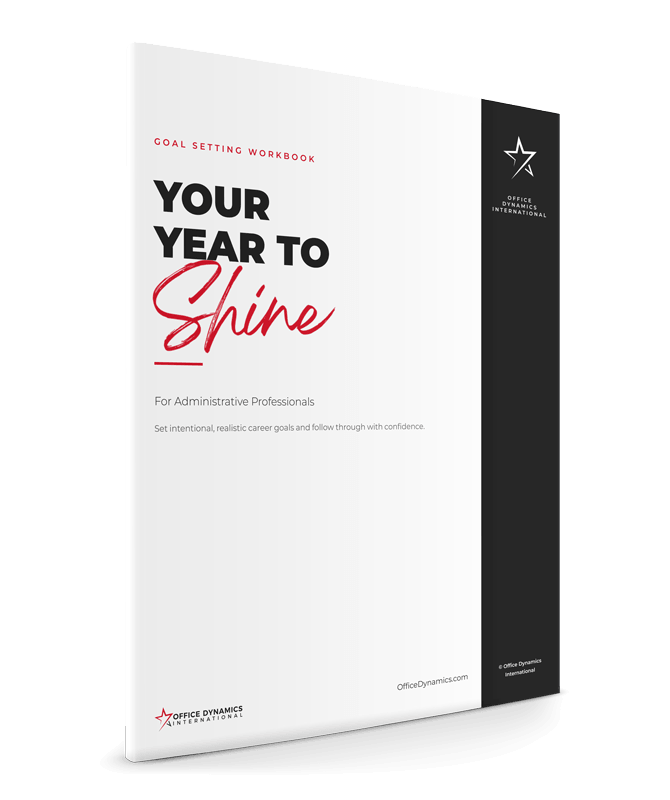
Download the Your Year to Shine Goal Setting Workbook for Administrative Professionals
Setting goals is easy. Following through is the hard part. That's why we created the Your Year to Shine Goal Setting Workbook for Administrative Professionals. This guided workbook helps you choose one meaningful goal, map it clearly, and track progress in a way that fits real assistant workloads.
If you're ready to stop setting goals that fade away and start building momentum you can actually sustain, this workbook will help you do exactly that.
Actionable Goals for Administrative Professionals
Ready to make a year of meaningful growth? Below are five goal categories with specific, realistic actions you can take. Select one or two that align with where you want to go next, then build your plan from there.
1. Goal: Become a Certified Professional
If you want your value to be recognized more clearly, a certification or designation can be a powerful move. It validates your expertise, strengthens your credibility, and often supports higher compensation. For many assistants, it also provides structure and confidence because you are learning best practices, not just relying on experience alone.
Actionable steps:
- Research relevant programs. Explore credentials that align with your goals. A designation such as the Certified Executive & Administrative Professional (CEAP) can signal well-rounded mastery of essential skills.
- Gain your leader’s support. Prepare a short proposal that links your training to organizational outcomes such as efficiency, productivity, communication, and stronger executive partnership.
- Create a study plan. Block time on your calendar for coursework and practice. Treat it as a real project with deadlines and milestones.
2. Goal: Develop Leadership Skills
Leadership is not a title. It is influence, initiative, and the ability to move work forward with clarity and confidence. Administrative professionals are positioned to lead because they see how the organization operates and interact across levels, teams, and priorities every day.
Actionable steps:
- Seek mentorship. Identify a leader you respect and ask for consistent check-ins. Even one conversation a month can sharpen how you think and operate.
- Volunteer to lead a project. Take initiative on a new process, an event, a committee, or an improvement that matters. Practical leadership builds faster than theory.
- Strengthen strategic communication. Practice presenting information with context, impact, and options. Bring solutions, not only updates.
3. Goal: Master a New Technology or Software
Technology fluency is no longer optional. A single high-impact tool can save hours each week and elevate your value across the team. The key is to choose technology that supports your real workflow, not technology that simply feels trendy.
Actionable steps:
- Identify a high-impact tool. Choose something that improves a major part of your work. This might be advanced features in Microsoft Office, a project management platform such as Asana or Monday.com, or a data visualization tool such as Tableau.
- Take a structured course. Use platforms such as LinkedIn Learning, Coursera, or Udemy to learn efficiently and build confidence through practice.
- Become the team resource. Offer to share what you learn through a short lunch and learn or a quick guide. Teaching strengthens retention and builds visibility.
4. Goal: Strengthen Your Professional Mindset
Your mindset shapes how you respond to pressure, feedback, conflict, and change. A strong professional mindset helps you recover faster, advocate for yourself, and stay focused on long-term growth. For assistants, mindset is often the difference between feeling stuck and feeling empowered.
Actionable steps:
- Practice positive reframing. When something feels hard, ask “What do I need to learn to handle this well?” rather than “I cannot do this.”
- Read for growth. Choose books that expand your thinking about leadership, confidence, boundaries, or strategic partnership. Consistent reading compounds quickly.
- Keep an accomplishment journal. Each week, write down three wins. This builds confidence and gives you real examples for reviews, interviews, and leadership conversations.
5. Goal: Prioritize Your Health and Wellness
The administrative profession can be intense. When your energy is drained, everything becomes harder, including patience, problem-solving, and communication. Protecting your health is not selfish. It is part of being effective, resilient, and sustainable.
Actionable steps:
- Schedule breaks. Put lunch and short breaks on your calendar the same way you schedule meetings. Protect them.
- Set boundaries around your work hours. Occasional overtime happens, but constant late nights create burnout. Choose a realistic stopping time and communicate it.
- Build movement into your day. A walk, stairs, stretching, or a quick reset helps reduce stress and boost focus.
Why Goals Fail by March and How to Prevent It
Most goal setting fails for one reason: the goal never makes it into your real life. It stays in a notebook, a note app, or a hopeful conversation you had in January. The fix is simple. Build a check-in rhythm that keeps your goal visible, measurable, and adjustable.
- Create a monthly check-in. Choose one day each month to review progress, update your plan, and set next steps.
- Track wins, not just tasks. Wins show outcomes and impact. This builds confidence and gives you language for performance conversations.
- Add accountability. Share your goal with a mentor, peer, or leader, and set a follow-up date to review progress.
Make Your Goals Real with the SMART Framework
Setting goals is the easy part. Achieving them requires structure. Use the SMART framework to turn good intentions into a real plan:
- Specific: What exactly do you want to accomplish?
- Measurable: How will you track progress and success?
- Achievable: Is this realistic in your current season of life and workload?
- Relevant: Does this align with your long-term direction and priorities?
- Time-bound: What is the deadline or target date?
Example SMART goal: By June 30, I will complete an online public speaking course and volunteer to present at one team meeting to build confidence and strengthen executive-level communication.
Your Year to Shine Starts with One Decision
Progress is more important than perfection. There will be busy weeks, curveballs, and seasons where your goal needs adjusting. That does not mean you failed. It means you are human and your role is demanding.
The most important thing you can do this year is choose one meaningful goal and treat it like it matters, because it does. When you invest in your growth, you strengthen your confidence, expand your influence, and become an even more valuable strategic partner. Your career deserves intention, not leftovers.
Next step: Choose one goal category above, write your first three action steps, and schedule a 30-minute planning session this week to set your timeline. Small steps create big change.