
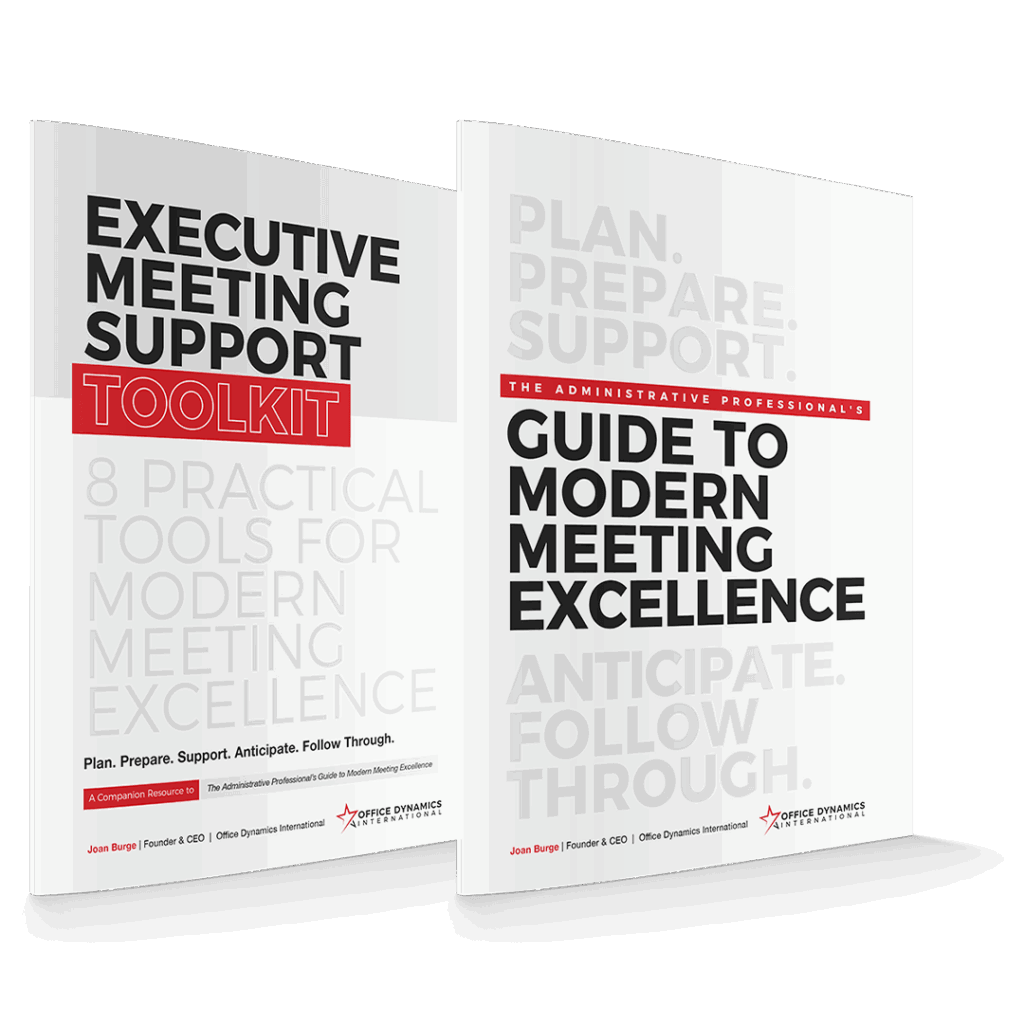
The Business-Critical Skills of Exceptional Administrative Professionals
The Administrative Professional’s Guide to
Modern Meeting
Excellence
by Joan Burge
THE STRUGGLE
The Meeting Ends. The Work Doesn’t.
You schedule the meeting. You send the invitation. You prepare the materials. Then the meeting happens, and suddenly there are new decisions, deadlines, promises, follow-up meetings, and shifting priorities to manage.
Meanwhile, your executive may move through six, eight, or more meetings in a day with little time in between. You may not be in the room, yet you’re still expected to know what matters, stay ahead of what’s coming, and make sure nothing falls through the cracks.
If you’ve ever thought,
“I wish I had known that.”
“When was that decided?”
“How am I supposed to anticipate when I don’t have the information?”
this Guide was written for you.
Why It Feels Harder Now
Meetings Have Changed. Meeting Management Needs to Change With Them.
Executives move from meeting to meeting with little transition time. Teams work across locations and time zones. Meetings happen in person, online, and hybrid, and technology and AI are changing how they’re prepared, documented, and followed up.
Modern Meeting Excellence goes far beyond finding an opening on the calendar, sending an invitation, or taking minutes. It means thinking about everything surrounding the meeting. What are we trying to accomplish? What does my executive need beforehand? What could get in the way? What was decided, and who needs to know? And most important, what needs to happen because this meeting occurred?
A checklist can remind you what to do. It cannot do the thinking for you.
This Guide helps you develop the thinking behind the tasks.
Who It’s For
This Guide Is for You If...
You support one or more executives with packed meeting schedules.
You often learn about decisions, deadlines, or promises after the fact.
Your executive attends meetings without you, and you’re left piecing together what happened.
You host or attend meetings yourself and want to contribute and follow through with more confidence.
You’re ready to move from meeting logistics to true strategic partnership.
You want to use technology and AI without losing the judgment only you can bring.
The Shift
Move From Meeting Planning to Modern Meeting Excellence
MCAP helps you intentionally move toward the right side of each pair.
Don’t simply schedule the meeting.
Understand why it matters.
Don’t simply send the materials.
Prepare people to contribute.
Don’t simply react when something goes wrong.
Anticipate and have a Plan B.
Don’t assume you can’t add value because you aren’t in the room.
Be informed. Be available. Be ready.
Don’t simply record what people said.
Capture what was decided and what needs to happen next.
Outcomes
What Will This Guide Help You Do?
The Guide helps you move beyond logistics and manage the entire meeting lifecycle with more confidence and foresight.
Prepare your executive so they walk into important meetings informed and ready.
Look beyond open calendar space to preparation time, transition time, priorities, time zones, and executive capacity.
Anticipate barriers before they become problems, and have a practical Plan B.
Support meetings well, even when you’re not in the room.
Recognize and capture the decisions, commitments, and deadlines that need to move forward.
Strengthen follow-through so promises and action items don’t disappear after the meeting.
Improve information flow between your executive, participants, teams, and systems.
Use technology and AI while applying the judgment, context, and discretion they can’t replace.
Build a stronger communication rhythm with your executive, including the next-day meeting debrief.
The Result?
You stay ahead, reduce surprises, protect your executive’s time, and help turn meetings into meaningful action.
Two Sides
You Experience Meetings From Two Sides
Most meeting resources focus only on the meetings you arrange for your executive. But that’s just one side of your meeting world.
You Are the Attendee or Host
Sometimes you’re the attendee or host. You need to prepare, contribute, capture your own commitments, and follow through.
You Are Supporting Your Executive
Other times you’re supporting your executive, and you may not even be in the meeting.
This Guide covers both.
Modern Meeting Reality
You do not have to be in the meeting to support the meeting.
Signature Practice
Yesterday’s Meetings Create Today’s Work
One of the most important practices in the Guide is also one of the most overlooked: the next-day debrief with your executive.
Your executive leaves yesterday’s meetings having made decisions, promises, and commitments. Deadlines may have changed. Someone may owe your executive information. Another meeting may need to be scheduled. If no one captures those outcomes, they disappear beneath today’s schedule.
Rather than debriefing after every meeting, Joan recommends using the previous day’s calendar during your next touch base to spot decisions, commitments, deadlines, follow-up meetings, information to share, and changes to today’s priorities.
You cannot manage information you do not have.
And you cannot consistently anticipate from incomplete information.
Contents
Inside the Professional Guide
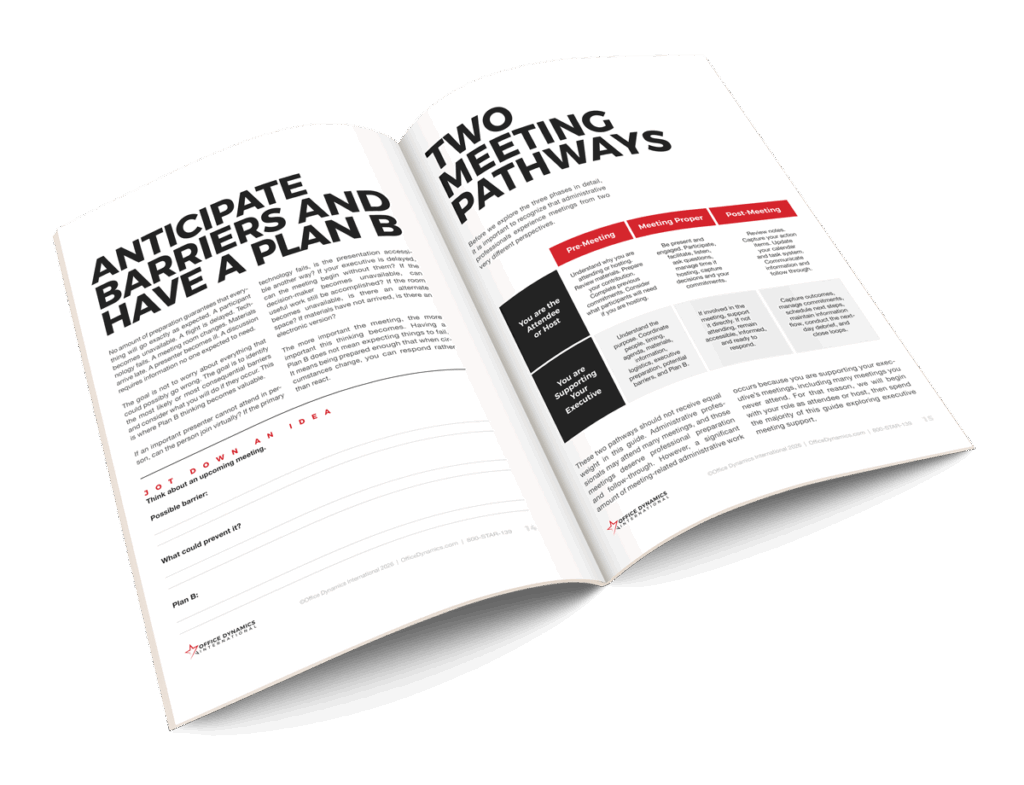
The Guide walks you through the realities, thinking skills, and three phases of Modern Meeting Excellence from both sides of the meeting.
The Foundation
The Modern Meeting Environment
What has changed, from hybrid meetings and faster schedules to information overload, AI, and meetings that create work across multiple systems.
Meeting Management Is a Thinking Skill
How to think beyond the visible tasks, mentally walk through a meeting, spot potential barriers, and prepare a Plan B.
Part One
When You Are the Attendee or Host
Part Two
Supporting Your Executive’s Meetings
Phase 1: Pre-Meeting
Think. Plan. Prepare. Anticipate.
Phase 2: Meeting Proper
Executive, Observe, and Stay Ready
Phase 3: Post-Meeting
Capture. Follow Through. Debrief. Close the Loop.
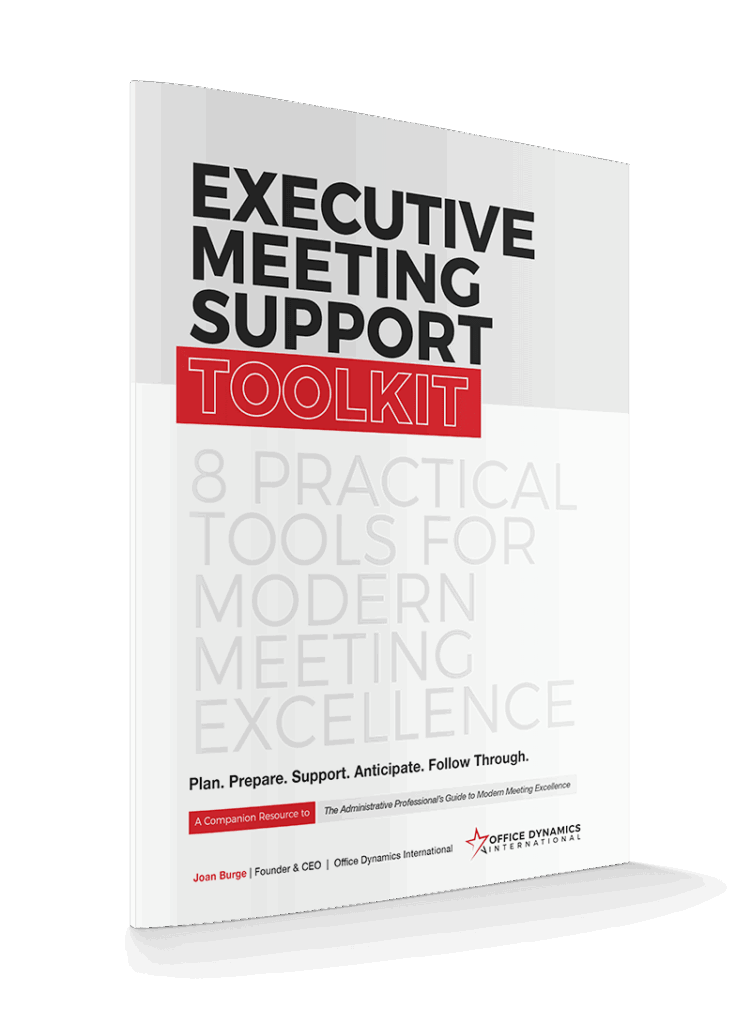
Executive Meeting Support Toolkit: 8 Practical Tools for Modern Meeting Excellence
Knowing what exceptional meeting management looks like is one thing. Doing it consistently is another. Your purchase includes the Executive Meeting Support Toolkit, a 17-page digital companion that helps you put the Guide into practice.
Executive Meeting Planning Worksheet
Clarify purpose, outcomes, barriers, and Plan B
Pre-Meeting Planning Checklist
Confirm people, timing, materials, and logistics
Executive Meeting Brief
Give your executive the context they need
Meeting Proper Support Checklist
Stay ready, whether you’re in the room or not
Post-Meeting Action Capture
Record decisions, owners, deadlines, and next steps
Next-Day Executive Meeting Debrief
Uncover what yesterday’s meetings created
Executive Commitment Tracker
Keep executive promises visible and moving
Meeting Manager’s Final Check
Review the full lifecycle and close the loop
The tools help you remember.
Your thinking helps you manage.
The Creator
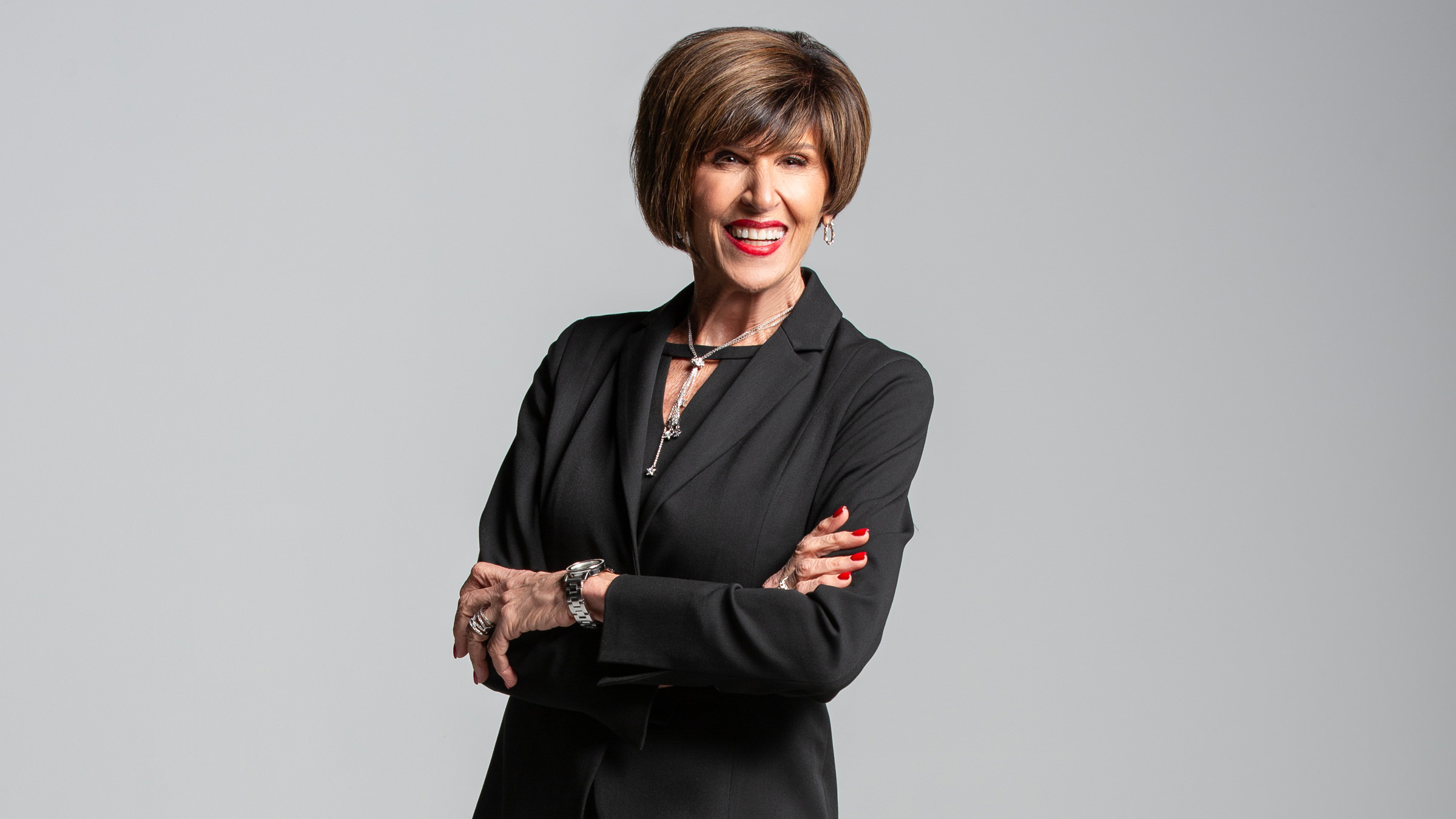
Joan Burge
Founder, Office Dynamics International
Administrative Industry Pioneer
- 20 years as an administrative professional
- 36+ years training executive & administrative professionals
- Thousands of meetings attended, facilitated, taught, and observed
Credibility
Built From More Than Research. Built From Experience.
This Guide is grounded in research, best practices, and more than five decades of real workplace experience.
Joan Burge spent 20 years as an administrative professional supporting executives and their meetings. For the past 36 years, as Founder and CEO of Office Dynamics International, she has sat on the executive side of the table, leading discussions, making decisions, and relying on administrative support to move the work forward. Along the way, she has attended, facilitated, taught, and observed thousands of meetings with administrative professionals, executives, and organizations across industries, including many Fortune 500 companies.
It is not simply based on what Joan has researched. It is based on what she has lived, taught, practiced, and observed for more than five decades.
Ready to Manage Meetings at a Higher Level?
Stop treating meetings as isolated calendar events. Start managing the thinking, preparation, decisions, commitments, and follow-through that surround them. After all, yesterday’s meetings create today’s work.
Read the Guide once to learn the framework, then keep it close. Return to the sections that match the meetings in front of you, and use the Toolkit to put each idea into practice.