
Securing conference approval takes real effort. You’ve made the case, justified the budget, and gotten the yes. Now comes the decision most administrative professionals underestimate: which conference actually deserves it.
The administrative professional conference landscape has expanded considerably over the past decade. More events are targeting executive assistants, administrative assistants, and office managers than ever before, which means more room to find something genuinely matched to your goals and more room to invest in an experience that doesn’t quite deliver on its promise. The questions below are the ones worth asking before you commit.
Start With Your Goals — and Where You Are in Your Career
The most useful conference is the one that meets you at your current professional level and moves you meaningfully forward from there. That requires clarity on two things: what you want to gain, and where you actually are in your development.
Most professionals attend for one of a few reasons. Some come with a specific skills agenda: a capability they want to build, a gap they’ve identified, a new area they want to explore. Others come for the professional community, the chance to spend real time with peers who understand the particular dynamics of this role. Still others come for the broader perspective, the kind of career thinking that rarely happens when you’re deep in the day-to-day of supporting an executive. All three are legitimate. The key is knowing which one matters most to you before evaluating any particular event.
The career stage question is equally important and often overlooked. If you’re early in your career, you may need foundational frameworks, an introduction to the profession’s possibilities, and a first meaningful exposure to the broader community. If you’ve been at this for fifteen or twenty years, you need something that challenges assumptions, surfaces blind spots, and introduces ideas genuinely ahead of where most of the profession is right now. A conference designed to serve a wide range of experience levels can sometimes deliver for no one particularly well. It’s worth asking whether the programming reflects that distinction.
Before you attend anything, define what success looks like for you specifically. What will you implement in the first thirty days after returning? What question are you hoping the conference helps you answer? What relationship do you want to build while you’re there? Those specifics make it possible to evaluate, after the fact, whether the investment paid off.
The Host’s Track Record — and the Room It Creates
A conference reflects the organization behind it. Understanding that organization’s history with the administrative profession and its genuine purpose for hosting tells you a great deal about what you’re walking into.
Some organizations have had decades to develop real expertise in what professionals at this level actually need. They’ve watched the role evolve, developed and tested curriculum over years of iteration, and built meaningful relationships inside the administrative community. That kind of institutional knowledge doesn’t always show up in a conference agenda. You have to look for it in their history, their consistency, and the track record of what prior attendees have actually taken home.
One useful signal: look at the themes a conference has built its programming around over the years. Organizations with genuine expertise in the profession tend to choose themes that anticipate where the field is going rather than reflecting where it already is. At Office Dynamics International, we’ve structured annual conference themes around ideas like collaboration, resiliency, and strategic leadership because those concepts represented what the profession needed to be developing, not just what was already visible on the surface.
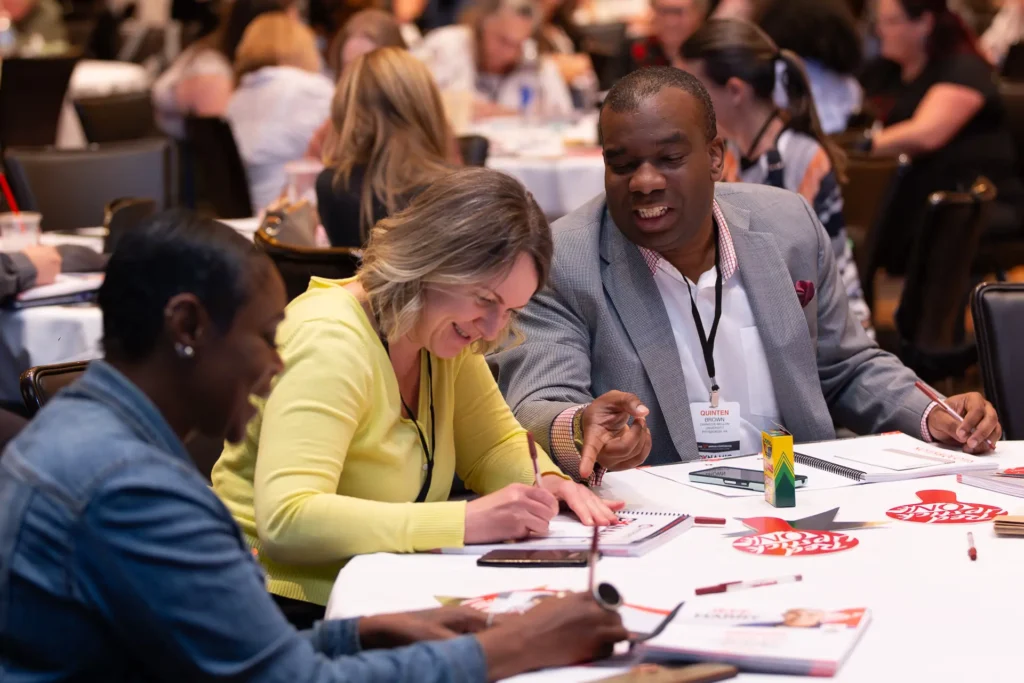
The host’s identity also shapes who shows up. An event with a strong reputation and a clear mission tends to attract a room full of professionals who take their development seriously, and that community becomes part of the experience itself. When you spend two or three days with peers who are genuinely invested in growing their careers, the conversations between sessions, the shared meals, and the informal exchanges become as valuable as anything happening on the main stage. That quality of community isn’t accidental. It’s a reflection of what the host has built over time.
The Office Dynamics Annual Conference has been built on this foundation for decades, with a program designed around the profession’s genuine development needs and an attendee community that reflects the commitment that mission attracts.
What a Well-Designed Program Actually Looks Like
Evaluating a conference program well means looking beyond the session titles and speaker names.
Start with the speakers themselves, but ask the right question about them. It’s not whether they’re well-credentialed or well-known in a general sense. It’s whether they have firsthand knowledge of the administrative world. A speaker who understands executive relationships, the challenge of influencing without formal authority, or the operational realities of high-level administrative work can give you something genuinely applicable. That specificity is what separates a session you return to in your notes months later from one you’ve forgotten by the time you land.
Look at the agenda as a whole, not just individual sessions. A well-designed conference has a coherent through-line. Sessions build on each other, themes compound across the days, and the experience has an arc. That’s different from a collection of unrelated speakers, however individually accomplished. Ask whether this program was designed as a learning experience or assembled as a lineup.
Pay attention to whether the agenda protects time for conversation. Some of the most valuable thinking at a great conference happens in the spaces between: a discussion that continues past the end of a session, a lunch conversation with someone from a different industry who manages the same executive dynamics you do, a half-hour of unscheduled reflection that lets an idea settle. A program that fills every hour from eight in the morning to five at night may inadvertently crowd out the open thinking that real professional development requires.
Consider whether the event produces materials that hold up after you leave. Participant guides, reference materials, and post-session resources you can return to weeks later signal that the organizers are invested in long-term learning outcomes. The conference that becomes a reference rather than a memory pays dividends well past the closing session.
Before You Register, Talk to Someone Who’s Already Been
Conference materials tell you what an organization wants you to know about the event. People who have attended tell you what it’s actually like. If you can get both perspectives, the alumni perspective is almost always more useful.
Before committing to an event you haven’t attended, make a direct effort to find someone who has. A message on LinkedIn, a question in a professional community you’re part of, or a conversation with a colleague who attended a previous year can give you more clarity than an hour spent on the conference website.
When you reach someone who’s been, ask specific questions. Not whether they enjoyed it — that’s too easy and too vague. Ask what they actually implemented when they returned. Ask what professional relationship from that conference they’re still in today. Ask what they would do differently if they attended again. Ask whether they went back a second year and, if so, why. Those answers reveal what the experience actually produced, not what it promised.
Peer input is especially useful for understanding whether a conference delivers for professionals at your level. Someone who attended early in their career and found it formative may be describing a genuinely different experience than the one a senior EA would have at the same event. Seek out input from people whose professional situations resemble yours.
Calculate the Full Return, Not Just the Cost
The investment in a professional conference is rarely just the registration fee. The real cost includes travel, lodging, and the opportunity cost of several days away from your executive and your organization. Any realistic evaluation needs to account for all of it.
But the return side of that calculation extends in both directions — before the event and after it — and it’s worth thinking through as carefully as the cost.
Before the conference: does the organizing body invest in your success before you arrive? Some well-designed events send pre-reads, offer a reflection framework for setting intentions, or create ways for attendees to connect with one another before the opening session. Those touchpoints are a signal that the organization is thinking about learning outcomes, not just logistics.
After the conference: is there a community, an accountability structure, or continued access to resources that keeps the experience alive? The professionals who get the most out of conference attendance tend to be the ones who return with a plan and a peer group that creates some structure for following through. If the conference builds anything that supports that process, it’s extending its value well past the final session.
And if you’ve attended a conference before and it delivered: consider returning. Multi-year attendees often describe a compounding effect. Each year, they arrive with more context, better questions, and deeper existing relationships in the room. A single attendance gives you the experience. Returning builds something more durable.
Key Takeaways
Choosing the right administrative professional or executive assistant conference is a career decision that deserves genuine evaluation, not just a comparison of dates and locations. Start with your goals and your career stage. What serves a second-year EA well is genuinely different from what challenges a twenty-year veteran, and the best conference for you is the one that meets you where you actually are, not where the average attendee is.
The host’s history and track record in the administrative profession shapes everything: the curriculum, the quality of the speakers, and the character of the room. An organization with deep roots in this work over many years brings a different kind of depth to its programming, and it tends to attract an attendee community that reflects that mission.
A well-designed program does more than offer accomplished speakers. Look for a coherent learning arc, sessions built around firsthand knowledge of the administrative world, and an agenda that preserves time for the kind of open conversation that real professional development requires.
Before registering for a conference you haven’t attended, find someone who has. Ask what they implemented afterward, what relationships they’re still in, and whether they returned. Alumni perspective tells you what the experience actually produced, not what it promised.
Finally, calculate the return on your investment across the full picture: what the organization does before and after the event, whether there’s a community or structure that supports follow-through, and whether the conference rewards you for coming back over multiple years. The events that compound in value over time are the ones worth protecting a place in your professional development plan.
Make the Decision Intentionally
Earning the opportunity to attend a conference is meaningful, and the administrative professionals who take it seriously from the start tend to get the most from it. That starts with the decision itself.
If you’re looking for a conference with deep roots in the administrative profession, a program built around where the profession needs to go next, and an attendee community of serious professionals invested in their own growth, the Office Dynamics Annual Conference is worth a close look. We’ve built this event around a genuine commitment to advancing the people who do this work, and that commitment shows in what attendees carry home year after year.
Whatever you choose, choose it with intention. The work you do before you register shapes everything that follows.