
15 Lessons in Professional Development for Administrative Assistants
Insights from Joan Burge’s Year-End Webinar Every December, I love gathering with you for our annual It’s a Wrap webinar. It’s a moment to slow down, reflect on the year we’ve shared, and pull forward the most powerful strategies, mindset shifts, and lessons in professional development for administrative assistants to carry into the new year. This year’s session, Joan’s Best Lessons and Strategies for 2025, was packed with encouragement, challenge, and real talk about what it takes to thrive as an administrative or executive assistant in a world that’s always speeding up. From self-leadership and personal branding to AI, agility, and living a truly “big life”, I’ve distilled a full year of webinars into 15 essential lessons—each crafted to strengthen your mindset, enrich your daily work, and position you for meaningful growth in 2026. Whether you joined us live or are catching up now, here’s a recap you can use as a blueprint for 2026.1. Set Your Standard High – and Never Lower It
I started with the foundation: your standards. In a world where “good enough” has quietly become the norm, I challenge you to set the bar higher on quality of work, communication, attitude, and professionalism. That might mean:- Choosing a phone call or virtual meeting over yet another unclear text.
- Taking the extra step to clarify a request instead of “winging it.”
- Holding yourself to excellence even when others are cutting corners.
2. Take Risks That Stretch Your Courage
“You cannot advance unless you step into discomfort.”
Growth doesn’t happen unless you get out of your comfort zone. When I set out to start Office Dynamics, I was “not qualified” to pioneer the training industry for administrative professionals—but I took the risk anyway. That single decision changed the trajectory of my life and career.
Risks for you might look like:
- Presenting a new idea to senior leadership.
- Volunteering to lead a project you’ve never led before.
- Enrolling in a course that stretches your skills (even if you’re nervous about it).
Not every risk will work out the way you expect—but every risk stretches your courage and prepares you for the next opportunity.
Reflection question: What risk did you want to take in 2025 but didn’t? What held you back—and what will you do differently in 2026?
3. Life Is Moving Faster: Choose Your Pace on Purpose
You can’t control the speed of the world, but you can choose how you move through the chaos.
Between rising expectations, digital overload, and AI acceleration, it can feel like the only option is to go faster and do more.
It’s ok to push back on that idea.
Being flooded with requests and responsibilities doesn’t mean you have to live in permanent overload. Self-leadership means choosing your pace, not absorbing everyone else’s.
Key strategies she emphasized:
- Prioritize based on negative impact if a task doesn’t get done—not just what feels urgent.
- Protect focused time for deep work.
- Recognize when you feel yourself tipping into frustration or burnout—and adjust.
And above all, lead yourself. You may not control budgets, restructures, or leadership decisions, but you do control your mindset, your boundaries, and what you say yes to.
Action Step: Block 30 minutes of focus time this week. Protect it fiercely. Use it to work on one meaningful goal that has been buried under the noise.
4. Live a Big and Bold Life – Not Just a Busy Life
“Busy” is not the same as fulfilled.
Drawing from my books, Give Yourself Permission to Live a Big Life and The Five Pillars Workbook, I invite you to think beyond productivity and ask:
- Breadth: Have I expanded my experiences, relationships, and responsibilities this year?
- Depth: Am I truly present in my work and life—or just racing from one thing to the next?
A “big life” isn’t about material things. It’s about meaningful experiences, deep relationships, and personal growth over time. It’s also not about perfect balance; it’s making sure you give thoughtful attention to each of your life pillars (career, family, financial, spiritual, and wellness) over the long run.
Challenge for 2026: Which pillar got the least attention in 2025? Give it one intentional act of care this week.
5. Remember: Every Day You Are on Stage
Whether you’re on camera, walking into your executive’s office, or simply showing up in a meeting, you are always “on stage.”
How you dress, how you speak, your presence on virtual calls, your ability to stay engaged and not multitask…these moments collectively build your professional reputation.
I shared a story that when I was an assistant at Coppertone and a leadership change eliminated my job, it was my everyday professionalism and strong brand that let another executive recommend me for a CEO-level assistant role elsewhere. My daily “on stage” behavior had been quietly opening doors long before that moment.
Ask yourself: If someone observed you for a week, what would they say your “stage presence” communicates?
6. Set Goals… and Adjust as Needed
Goals matter, even in unpredictable times.
In a rapidly changing world, it can be tempting to skip goal setting because “everything changes anyway.” I strongly disagree!
You still need targets. Goals give you direction, discipline, and a reason to stretch.
The key is building in agility:
- Adjust timelines when circumstances shift.
- Revise strategies when something isn’t working.
- Stay committed to the outcome even when the path changes.
Changing your approach isn’t failure; it’s evidence of maturity, flexibility, and resilience. It’s your discipline that separates desire from achievement.
You’ll see this theme again at our 2026 conference, The Agile Assistant, where we’ll dive into 12 dimensions of agility.
Your Action Step:
Write one professional goal for 2026 and identify two alternative paths to reach it. Flexibility creates momentum.
7. Be a Lifelong Student—Especially in an AI-Driven World
“If your company won’t invest in you, invest in yourself.”
Your willingness to learn is your greatest differentiator, and relying solely on corporate budgets or leaders’ decisions for
your professional development is not self-leadership.
The administrative professionals who will stay relevant in an AI-driven world are those who:
- Continuously learn new tools and technologies.
- Strengthen their human differentiators: emotional intelligence, critical thinking, judgment, and strategic partnership.
- Treat learning as an ongoing habit, not a one-time event.
AI is already changing roles and structures. But AI cannot replace your empathy, judgment, and ability to navigate human relationships. Your job is to combine both: use AI wisely while sharpening the skills it can’t replicate.
If you’re looking for a place to deepen this in 2026, check out our
Fall in Love with AI virtual event
on February 12, 2026.
Your Action Step:
Choose one area where you want to grow next year and commit to a training or course—whether your organization pays for it or not.
Stay ahead in your career with ongoing learning designed specifically for administrative and executive assistants.
Our free monthly webinars deliver practical strategies, fresh insights, and real-world tools you can apply immediately.
Each session is led by Joan Burge or industry experts and focuses on the skills that matter most today, from communication and leadership to AI and professional development for administrative assistants.
Visit our webinars page and subscribe to stay informed about every upcoming session.
8. Focus Is a Superpower
We can’t do everything at once, and we were never meant to.
While it might sound impressive, multitasking drains your energy and reduces your effectiveness.
Instead, you should focus.
Focus will:
- Protect your energy.
- Increase quality and accuracy.
- Help your brain stay in “deep work” instead of constantly resetting.
Rather than glorifying multitasking, think of yourself as an expert juggler: many balls may be in the air, but your attention is fully on the one in your hand.
Try this: For one hour a day, choose a single A-priority task, silence notifications, and commit to uninterrupted focus. Notice how much more you accomplish.
9. See Barriers as Pathways
Barriers aren’t always signs you’re on the wrong path. In fact, barriers are often your greatest teachers.
When you hit an obstacle:
- You can give up, or you can explore alternate routes.
- You can get stuck in frustration, or you can practice creative problem-solving.
- You can isolate, or you can reach out for perspective, support, or connections.
Many of the pivotal moments in my 35-year journey with Office Dynamics have been born out of obstacles. Each of those barriers sharpened my skills and deepened my resilience.
Reframe for 2026: Instead of asking, “Why is this happening to me?” try, “What is this situation here to teach me?”
10. Establish Your Brand with Intention
If you don’t define your personal brand, someone else will.
Your brand is more than clothing or a LinkedIn headline. It’s:
- The words people use to describe you.
- The energy you bring into a room.
- The way you write, respond, follow through, and show up.
During the webinar, I asked attendees to name a word they want associated with their brand: “resourceful,” “calm,” “modern,” “problem-solver,” “professional,” “full of energy,” and more. I then challenged viewers to ask:
Do your daily actions actually project the values you want to be known for?
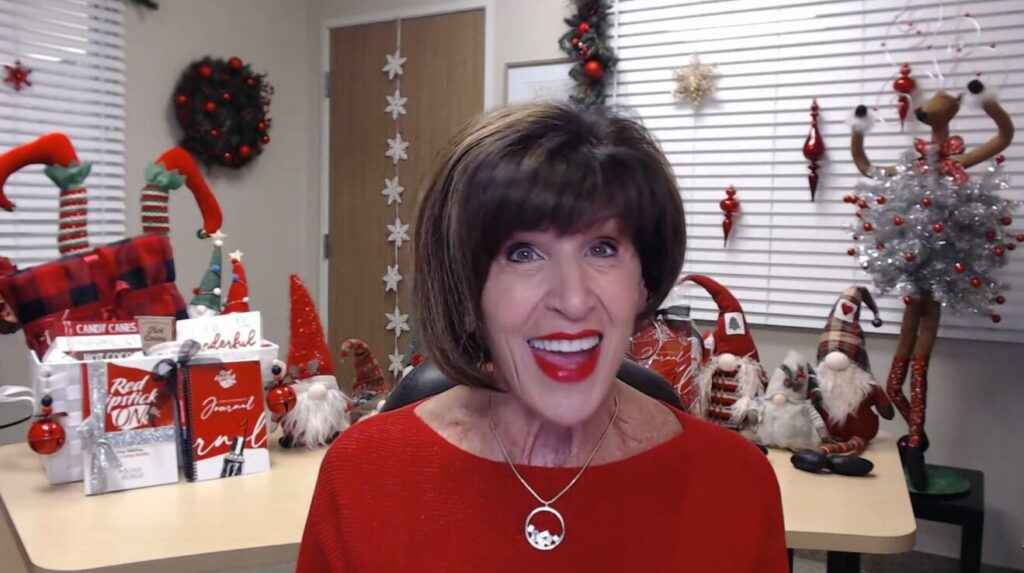
I have become known as “the red lipstick on lady.” It’s a visual symbol that is tied to my deeper brand values of boldness, empowerment, and women’s leadership.
Action step: Choose 3–5 words you want people to associate with you. Keep them visible at your desk and use them as a daily behavior checklist.
11. Be a Champion for What’s Right
Champions go beyond their job description. They:
- Speak up respectfully when something isn’t working.
- Model professionalism even when trends pull the other way.
- Bring positivity, joy, and hope into workplaces that feel heavy or discouraged.
One simple example is email etiquette. It may sound minor, but starting emails with a greeting, including a clear subject line, and providing a phone number where you can be contacted is “doing the right thing”—even if others aren’t.
Being a champion isn’t loud or dramatic. Instead, being a champion is doing small things the right way, consistently.
Your Action Step:
Choose one small act this week that elevates your culture—refining email etiquette, offering encouragement, or simply bringing a helpful tone to tense moments.
12. Advocate for the Profession
I’ve spent 35 years advocating for and elevating the administrative profession. This is a responsibility that belongs to every assistant.
Advocacy can look like:
- Educating leaders that this is a career of choice, not a fallback.
- Positioning yourself as a strategic business partner, not “just support.”
- Making the case for training and development—for yourself and your peers.
- Modeling the future of the role through your own behavior and contributions.
You’re not only doing your job; you’re shaping how the world sees your profession.
Your Action Step:
Share one resource, training, or insight with another assistant. Advocacy begins with one conversation.
13. Communicate with Tact and Professionalism
In a virtual-first world, it’s easy to forget there are real people behind the chat windows and email threads.
Your words carry weight, and it’s important to use your words intentionally.
Remember:
- Tone builds trust, or destroys it.
- Be clear, respectful, and specific.
- Avoid typing things in chat that you wouldn’t say face-to-face.
Tactful communication builds your credibility and trust. It positions you as someone leaders can trust with sensitive, complex, or high-stakes conversations.
Your Action Step:
Before hitting “send” on your next important email, pause and reread it through the lens of tact, clarity, and professionalism.
14. Success Is Built in Small Daily Disciplines
Big goals are achieved through small, consistent actions.
Here are four daily disciplines and habits that build long-term success:
- Show up like it matters. Even on days you’re tired or distracted, bring your best presence.
- Bring solutions, not just problems. When something goes wrong, arrive with ideas, not just complaints.
- Own your energy. Don’t wait for others to “pump you up.” Self-leadership means managing your own mindset.
- Follow through with excellence. Finish what you start. Close loops. Tie up loose ends.
Start and end your day with intention, deciding how you want to show up and reflecting on what you’re grateful for.
Your Action Step:
Identify one daily discipline you can adopt for January. A two-minute practice can change the trajectory of your year.
15. Let Gratitude and Presence Anchor Your Ambition
Ambition matters. Strategy matters.
But without heart, success feels empty.
I encouraged you to pair ambition with gratitude and presence:
- Recognize progress, not just gaps.
- Journal regularly about what you’re thankful for.
- Be present in your day instead of mentally racing to the next thing.
Gratitude doesn’t ignore challenges. It grounds you so you can navigate them with strength and perspective. For me, gratitude journaling has been a steady anchor through both crisis and celebration.
Your Action Step:
Start or restart your gratitude journal. Each evening, write down three things that grounded or lifted you that day.
Your Turn: How Will You “Do Life” in 2026?
The key message in professional development for administrative assistants is this:
Life is hard and it is beautiful, full of climbs and valleys, and we were never meant to navigate it alone.
As you look toward 2026, pause and ask yourself:
- Which of these 15 lessons do I most need right now?
- Where do I need to raise my standards, or my courage?
- How will I invest in myself this year, regardless of budgets or titles?
However you answer, know this: once you’re part of the Office Dynamics community, you’re part of our extended family. We’re honored to “do life” and work with you, and we’re cheering you on as you write your next chapter.
Here’s to a bold, meaningful, joy-filled 2026.
I’ll see you in the new year.